
How to Journal Your Trades with TradeTerminal
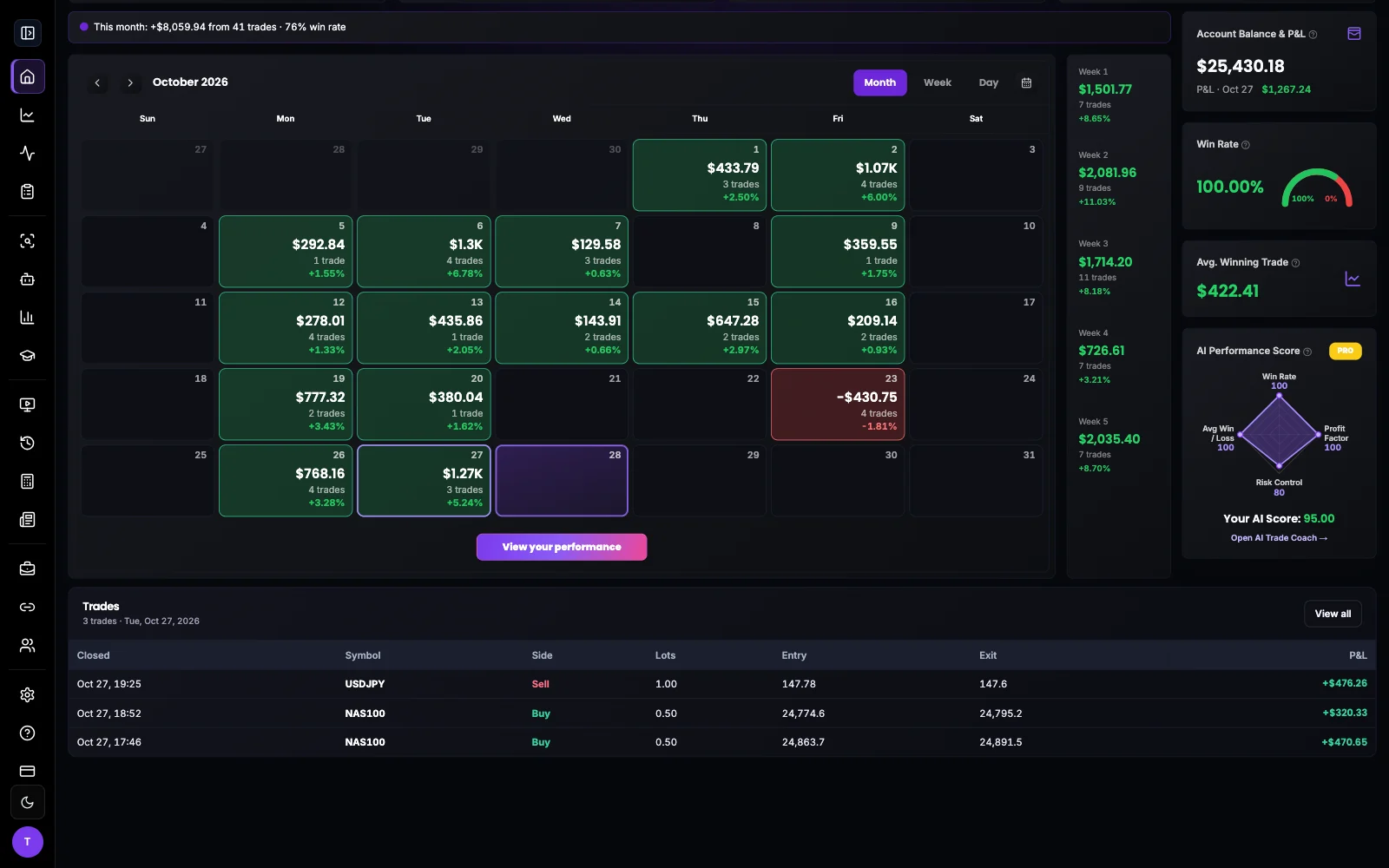
A trading journal only helps if it is complete and if you actually read it. Most journals fail on the first point: typing every trade into a spreadsheet after a losing day is the last thing anyone wants to do. TradeTerminal keeps the journal for you, so your time goes into the review.
1. Get your trades into TradeTerminal
There are two ways.
- Connect your broker. Open Supported Brokers, pick your broker and connect your MT5 account with its number, server and password. Closed trades and your balance then arrive on their own.
- Import a CSV. On the Dashboard press Import Trades and choose the trade history file from your broker. TradeTerminal shows the rows it found before it saves them.
Every trade is stored with its symbol, side, lots, entry, exit, commission, swap and net result.
2. Read the month on the calendar
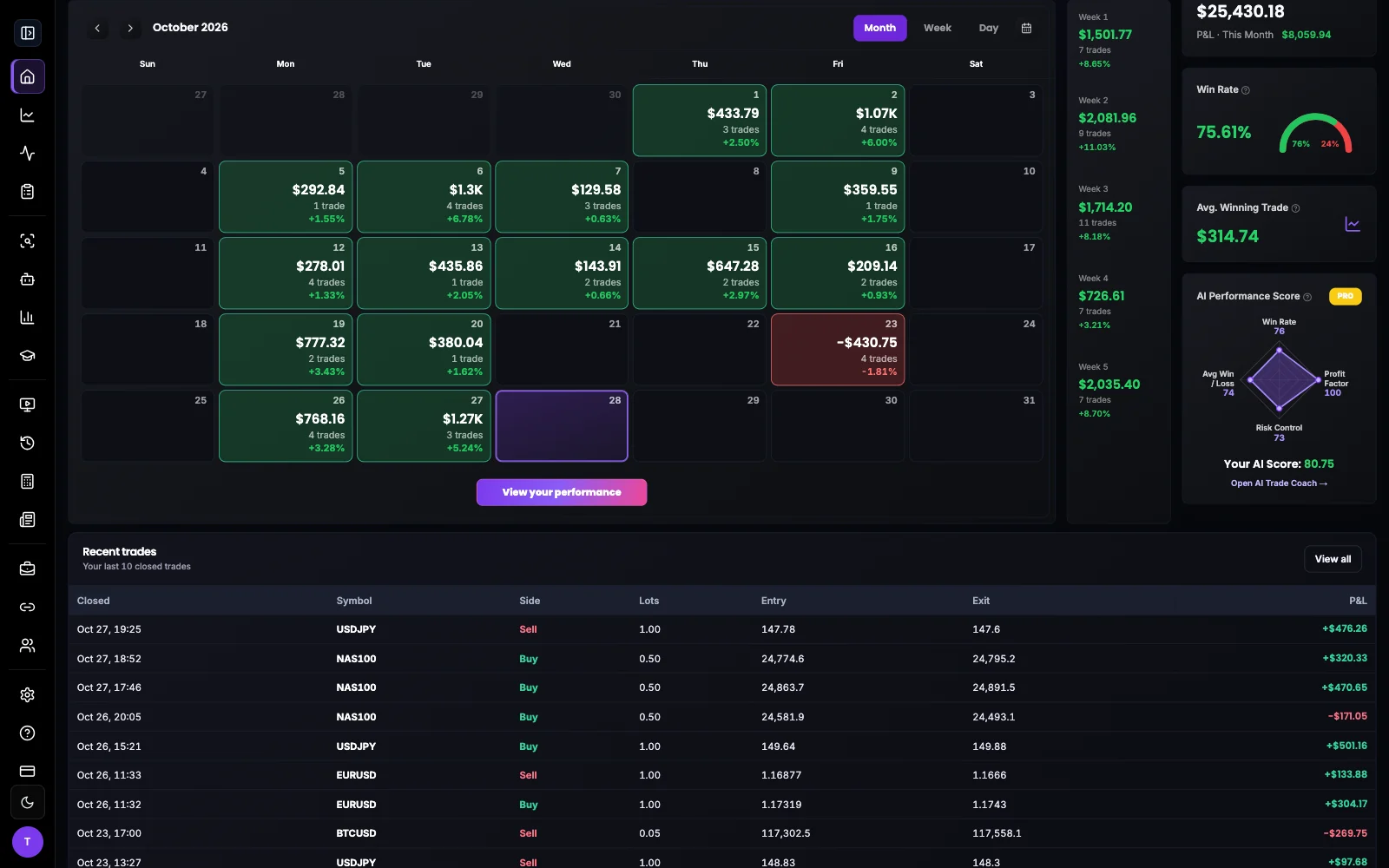
Open the Dashboard and look at the calendar first. Green days made money, red days lost it. Each day shows its result, the number of trades and the return on your balance.
Two things are worth looking for:
- Red days with many trades. That is usually overtrading or revenge trading.
- A good week followed by one large red day. That is usually a position that was too big.
3. Open a day and ask why
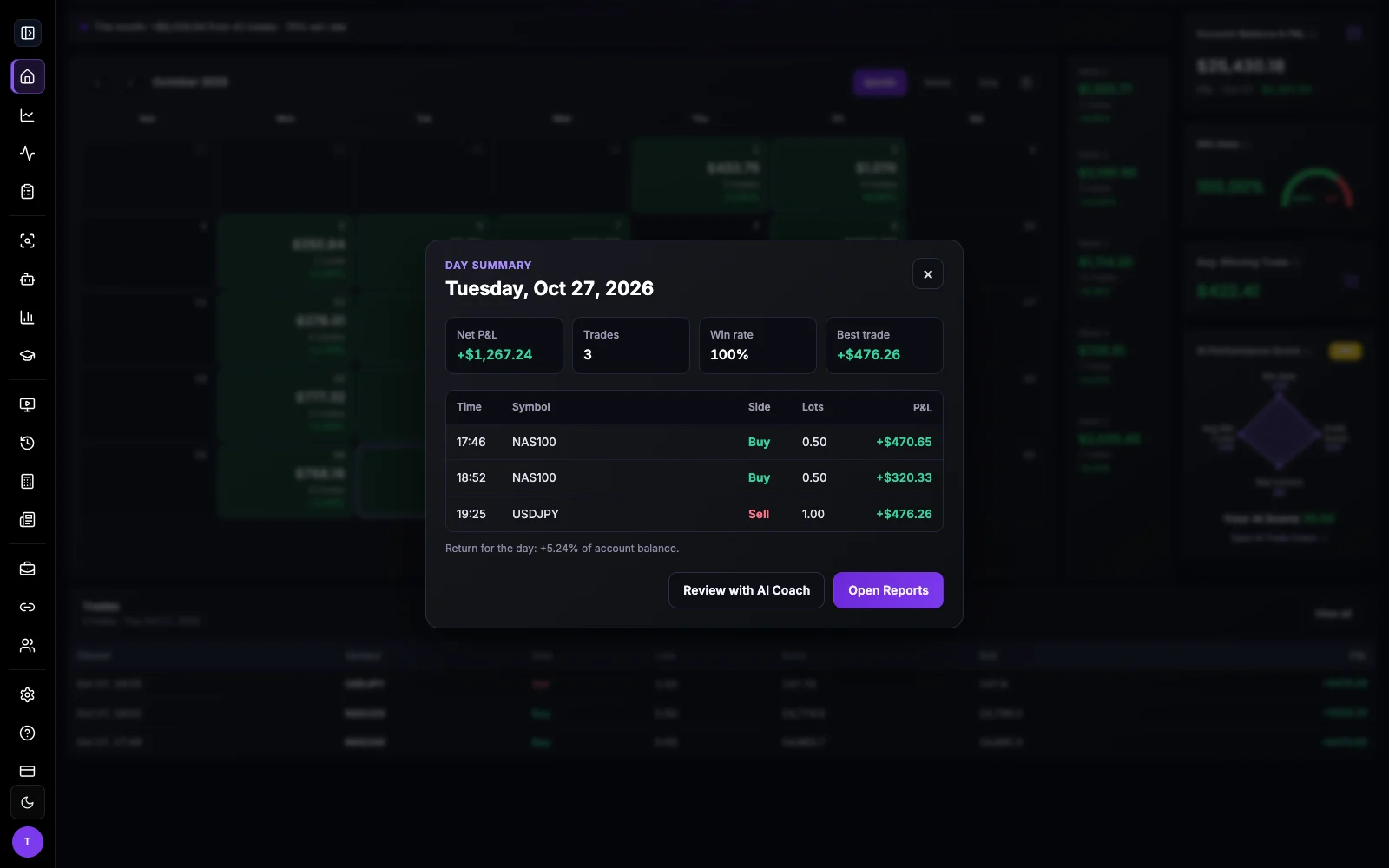
Tap any day. TradeTerminal lists the trades of that day with the net P&L and win rate. From the same pop-up you can:
- press Review with AI Coach to get a plain review of what went well and what went wrong that day, or
- press Open Reports to see the report for that date.
4. Review once a week
Pick one fixed time, for example Sunday evening. Open Performance and check three numbers: win rate, profit factor and your average win against your average loss. Then read the AI Trade Coach's list of repeated mistakes and choose one rule for the coming week, such as "no more than four trades a day".
5. Keep it honest
TradeTerminal shows your real numbers in your own account currency, including the bad days. A journal that hides losses teaches nothing. Trading carries risk, and past results do not guarantee future results; the journal is there to improve your process, not to predict the market.